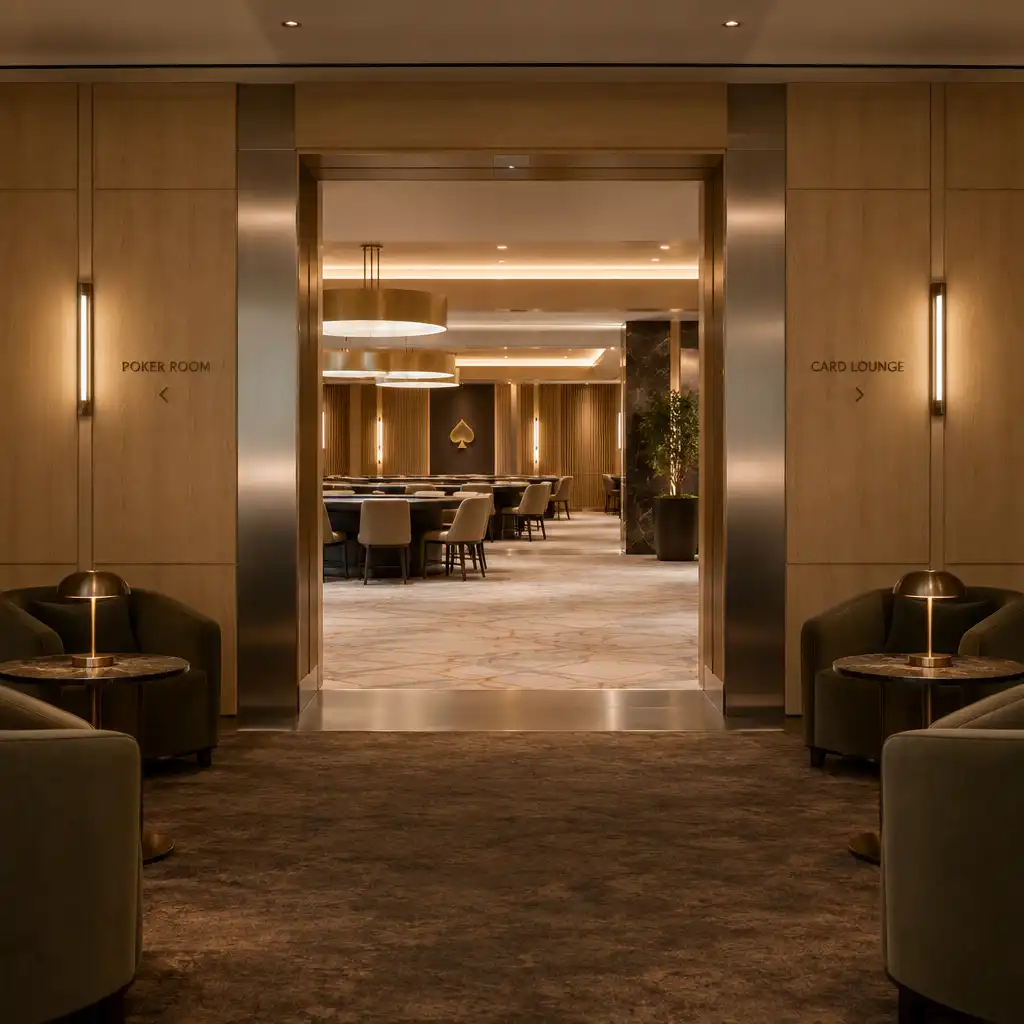
The Hobart Poker Room

The Hobart Poker Room is not a repurposed corner or a temporary setup. It is a dedicated architectural space where every element—timber, steel, light, and table placement—has been measured and crafted for one purpose: face-to-face poker.

Architectural Philosophy

A Room Designed for Offline Poker

Materials & Structure

Timber and Structure: The Room’s Skeleton

Huon Pine and Pale Timber

The room’s table surrounds, wall panelling, and seating accents use pale Tasmanian timber, including Huon pine, chosen for its fine grain and warm, light tone. The timber is finished to a matte surface that feels smooth under the hand and calm under the room’s lighting.

Timber is used structurally, not decoratively—table surrounds are load-bearing and integrated into the floor plan. The pale timber contrasts with deep forest felt on the poker tables, creating a clear visual hierarchy. All timber is locally sourced where possible, reinforcing the Hobart identity.

Exposed Structure, Honest Joinery

The room does not hide its construction. Steel beams, timber joints, and fixing details are left visible, giving the space the feel of a precision workshop. This honesty extends to the poker tables themselves, which are built to be touched, leaned on, and used for hours.

Brushed steel is used for table edges, lighting mounts, and subtle room dividers. Joinery is precise and visible, with no decorative mouldings or false finishes. The exposed structure helps players understand the room’s scale and feel grounded in the physical space.
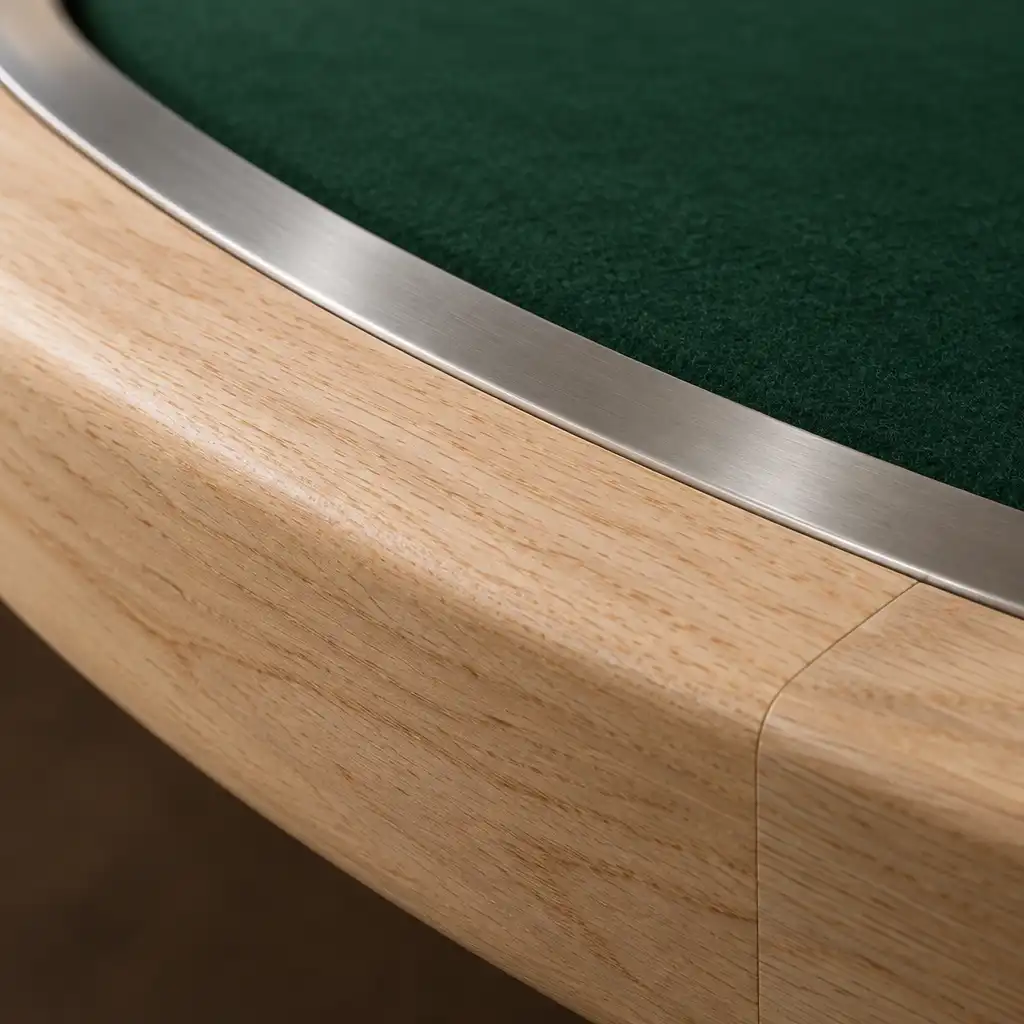
Close-up of a poker table edge showing pale Tasmanian timber surround and brushed steel trim
Illumination

Precision Lighting Above Every Table

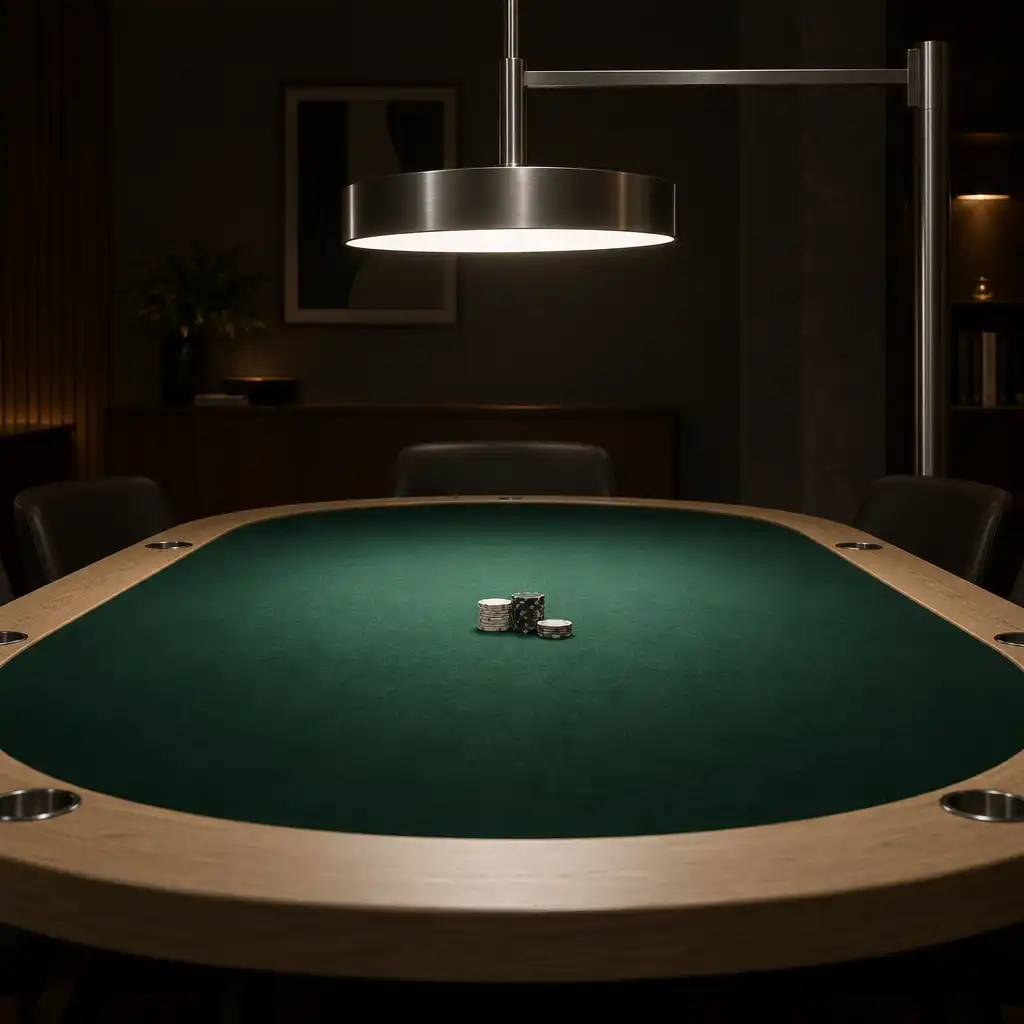
Precision lighting fixture positioned above a poker table, creating a bright pool on the felt while the room remains in shadow
Light Where It Matters

Each poker table has a dedicated lighting fixture positioned directly above its centre. The light is warm but precise, eliminating glare on cards and reducing eye strain during long sessions. The surrounding room is kept slightly dimmer, so the table becomes the natural focal point.

Fixtures are mounted on brushed steel arms that echo the room’s structural language. Light temperature is tuned to flatter the pale timber and deep forest felt. No flickering, no harsh spots—just even, consistent illumination across the table surface.

Atmosphere Without Distraction

The lighting design also controls the room’s atmosphere. By keeping the perimeter darker and the tables bright, the room feels intimate and focused. Players can see their cards clearly, read opponents’ expressions, and stay engaged without the fatigue of uniform overhead lighting.

Dimmable zones allow the room to shift from bright afternoon play to a warmer evening mood. The contrast between table light and room light creates a natural sense of enclosure around each game. Lighting is integrated into the architecture, not bolted on as an afterthought.

Table Layout

The Table Arrangement: A Room of Focused Games

Player Comfort

Seating and the Player’s Position

Built for Hours at the Table

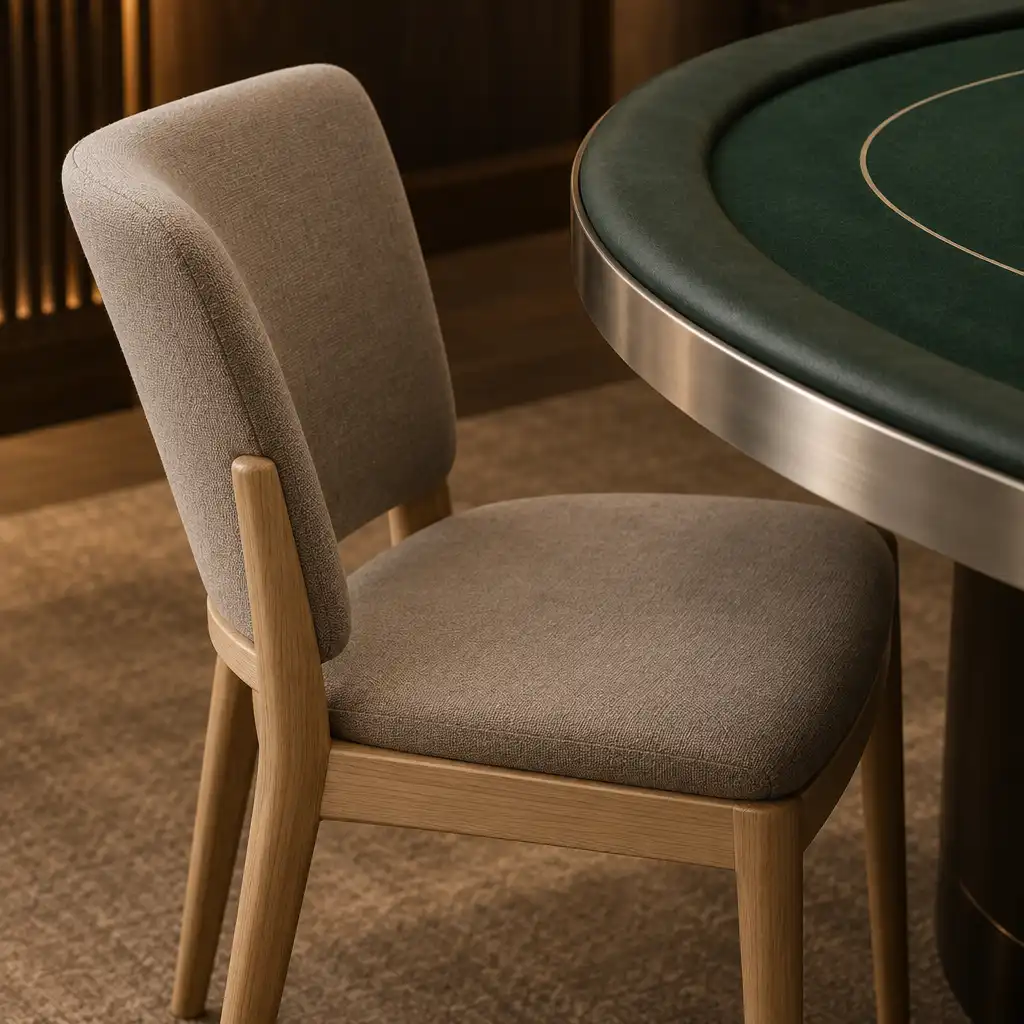
The chairs in The Hobart Poker Room are not borrowed from a dining room or a conference centre. They are designed for poker: firm but supportive, with a slight forward tilt that keeps players engaged with the table without causing fatigue.

Seat height is matched to the table height for a natural arm position. Upholstery is a durable, matte fabric in a neutral tone that complements the timber. Chairs are weighted to stay stable during long sessions.

The Player’s Relationship to the Table

Every seat is positioned so that the player’s hands rest naturally on the table edge, with a clear view of the cards and the other players. The distance from seat to table centre is consistent across all tables, so players can move between games without adjusting their posture.

Armrests are set at table height to reduce shoulder strain. The table edge is rounded and smooth, with no sharp corners. Seating is arranged to allow easy entry and exit without disturbing neighbours.

Modern chair pulled up to a poker table with pale timber frame and deep forest felt visible
Physical Play

Physical Cards and Neutral Chips: The Tools of Play

Real Cards, Real Shuffle

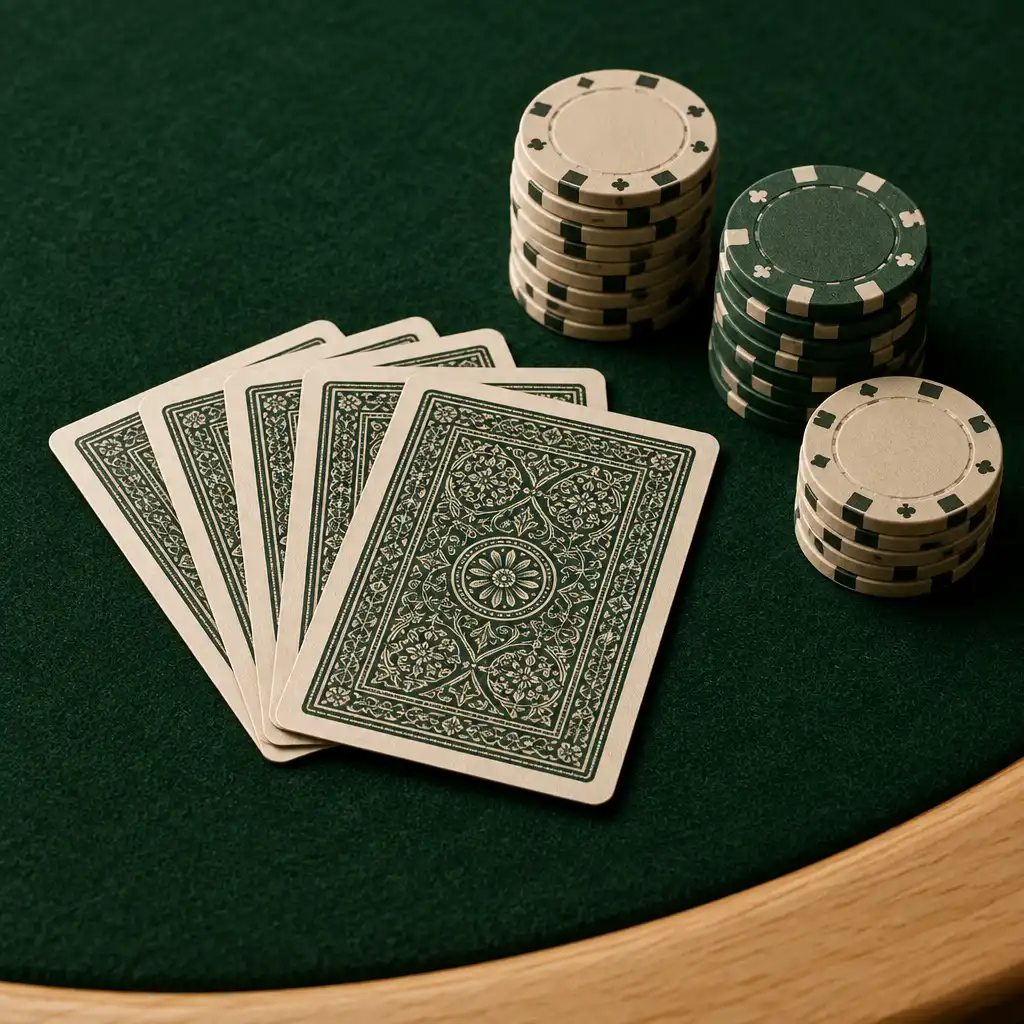
Every game in The Hobart Poker Room uses physical playing cards. The sound of a shuffle, the feel of the card stock, and the visible wear of a well-used deck are part of the room’s atmosphere. No digital dealing, no screens.

Cards are replaced regularly to maintain quality. The shuffle and deal are performed by players or a dealer, depending on the session format. The tactile nature of physical cards reinforces the face-to-face experience.

Physical playing cards and neutral poker chips arranged on a deep forest felt poker table
Neutral Chips, No Distractions

The chips used in the room are neutral in colour and weight, designed to be handled easily and stacked cleanly. They are not decorative or branded, and they carry no monetary markings, keeping the focus on the game itself.

Chip colours are muted and consistent across all tables. The weight and texture of the chips are chosen for comfortable handling. No promotional or casino-style branding appears on any chip.

The Absence of Screens

There are no screens in The Hobart Poker Room—no televisions, no digital displays, no devices at the table. This deliberate choice keeps attention on the cards, the chips, and the other players, preserving the offline poker experience.

The room’s acoustic design minimises external noise. Players are encouraged to keep personal devices away from the table. The result is a quieter, more focused atmosphere than a typical entertainment venue.

Live Atmosphere

The Room in Session: Atmosphere and Focus

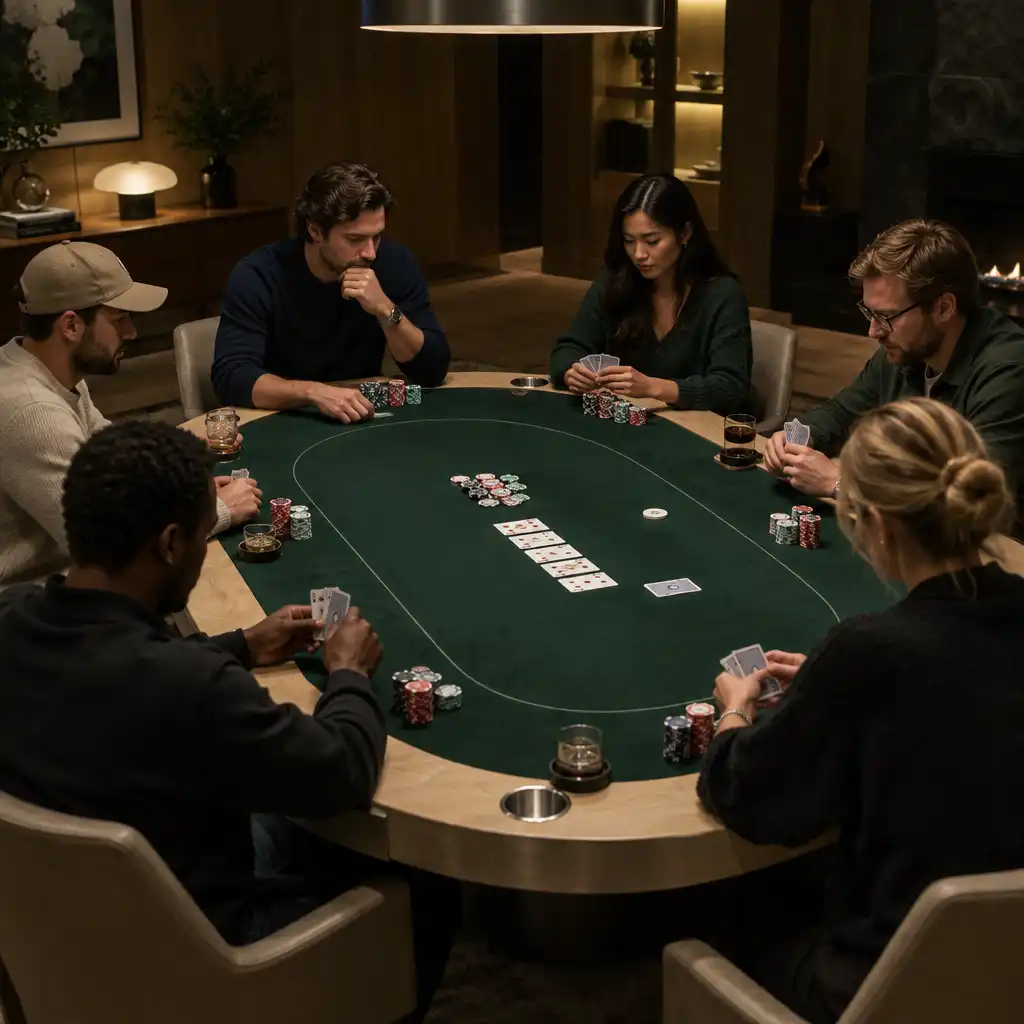
Players seated around a physical poker table during a live session, with warm lighting focused on the felt
Quiet Concentration

During a session, the room settles into a rhythm of quiet concentration. The only sounds are the shuffle of cards, the soft click of chips, and the occasional low comment between players. It is a space designed for focus, not for noise.

Acoustic panels absorb excess sound and reduce echo. Players speak in low tones, respecting the concentration of others. The lighting creates a sense of enclosure around each table.

A Shared Focus

Despite the quiet, the room feels alive. Players are engaged with their cards, their chips, and each other. There is a shared understanding that this is a serious game, played in person, with all the nuance and tension that brings.

Eye contact and body language are part of the game. The absence of screens means every player is present in the moment. The room’s design encourages a respectful, focused atmosphere.

Connected Spaces

From the Poker Room to the Card Lounge and Restaurant

A Natural Transition

The Poker Room is not isolated. A short walk leads to the Card Lounge, a quieter space for conversation and lighter play, and to the restaurant, where Tasmanian dishes are served beside the poker action. The transition is seamless, allowing players to move between spaces without leaving the venue.

The Card Lounge offers a different pace and atmosphere from the main Poker Room. The restaurant is smaller and contemporary, with a menu that reflects Tasmanian produce. The three spaces share the same architectural language: timber, steel, and precise lighting.

An Evening at Poker Shed Hobart

A typical visit might begin with a poker session in the Poker Room, continue with a break in the Card Lounge, and end with a meal in the restaurant. The venue is designed so that players never have to leave the building to complete their evening.

The restaurant is positioned to be visible from the Poker Room, but not intrusive. The Card Lounge provides a comfortable space for players between sessions. The entire venue is designed for face-to-face interaction, from the tables to the dining room.

Transition space between the Poker Room and Card Lounge with pale timber panelling and brushed steel details
Visit The Room

Plan Your Visit to The Hobart Poker Room

The Hobart Poker Room is best understood in person. Visit Poker Shed Hobart at 103 Collins Street, Hobart, and see how the timber, steel, and light come together around the poker tables. Enquire via the contact page or call the venue to plan your visit.